Partners In Learning Blog Team

Partners In Learning Blog Team
Blog Team

Tuesday, April 5, 2011

Honey, the children are fighting again!

Sibling rivalry is defined as antagonism between brothers and/or sisters that results in physical fighting, verbal hostility, teasing, or bullying.


Parental resources are limited. There is never enough time in the day to ensure that each child receives the amount of individual time and attention they want and feel they deserve. Results from a recent census poll indicate that 82% of us have at least one sibling. As we all know, sibling rivalry can and often does impact relationships between siblings throughout their lifetime. Do parents play a role in sibling rivalry? The answer is YES, and there are many things parents can do to encourage positive relationships between siblings.

Strategies for reducing or eliminating sibling rivalry include:

1. Do not compare your children with each other.

2. Do not typecast your children.

3. Encourage teamwork.

4. Give attention to positive interactions between siblings.

5. On the flip side, when you find yourself constantly intervening in sibling disputes, it may be because your children have found a way to ensure parental attention!

6. Plan fun family activities

7. Ensure that each child has enough time and space of their own.

8. Do not hold up one child as a role model for the others.

Learn more about this subject by visiting our Community Resource Room and check out our Love and Logic series.

Saturday, April 2, 2011

April is Autism Awareness Month
 
Autism Spectrum Disorder affects nearly 
60,000 North Carolinian's

Autism  affects 1 in 110 Children, 1 in 70 Boys
Autism Prevalence figures are growing
WE NEED ANSWERS

In clinical terms, there are a few “absolute indicators,” often referred to as “red flags,” that indicate that a child should be evaluated. For a parent, these are the “red flags” that your child should be screened to ensure that he/she is on the right developmental path. If your baby shows any of these signs, please ask your pediatrician or family practitioner for an immediate evaluation:
  • No big smiles or other warm, joyful expressions by six months or thereafter
  • No back-and-forth sharing of sounds, smiles, or other facial expressions by nine months or thereafter
  • No babbling by 12 months
  • No back-and-forth gestures, such as pointing, showing, reaching, or waving by 12 months
  • No words by 16 months
  • No two-word meaningful phrases (without imitating or repeating) by 24 months
  • Any loss of speech or babbling or social skills at any age
*This information has been provided by First Signs, Inc. ©2001-2005. Reprinted with permission. For more information about recognizing the early signs of developmental and behavioral disorders, please visit http://www.firstsigns.org or the Centers for Disease Control at www.cdc.gov/actearly.
 

Thursday, March 31, 2011

Taking a Time Out

When parents get frustrated, angry or just tired, often, we need a break from
the activities of the day to cool off, rest and regain our composure. We take a TIME
OUT! When using time out with our children, it has the same purpose. Being over
stimulated or being tired, often precede the need to use time out with our children.
Our children need a break, they have gotten angry or too frustrated to deal with the
situation in an appropriate manner. Though time out is used as a discipline method
its purpose is to allow the child to cool off so that they can better handle the situation.


A few simple steps as to how time out should be conducted:

• Stay Calm

• Identify to your child that time out is about to occur

• Pick the place whether it is their room or a particular chair

• Tell your child why they are in time out

• Use a timer as a visual for the child and a reminder for the parent that time out is over


It does not matter if you are a permissive parent or a strict parent, what matters is that you are:

• Persistent

• Patient

• Calm


Last but not least cute ideas to use at home for a time out situation would be to have a “Cozy Corner” with a bean bag or a “Thinking Chair”.


Resting in my "Thinking Chair"
Time Out Tips:
Dr. Joseph Stegman

http://www.behavioralpeds.com/        

Wednesday, March 30, 2011

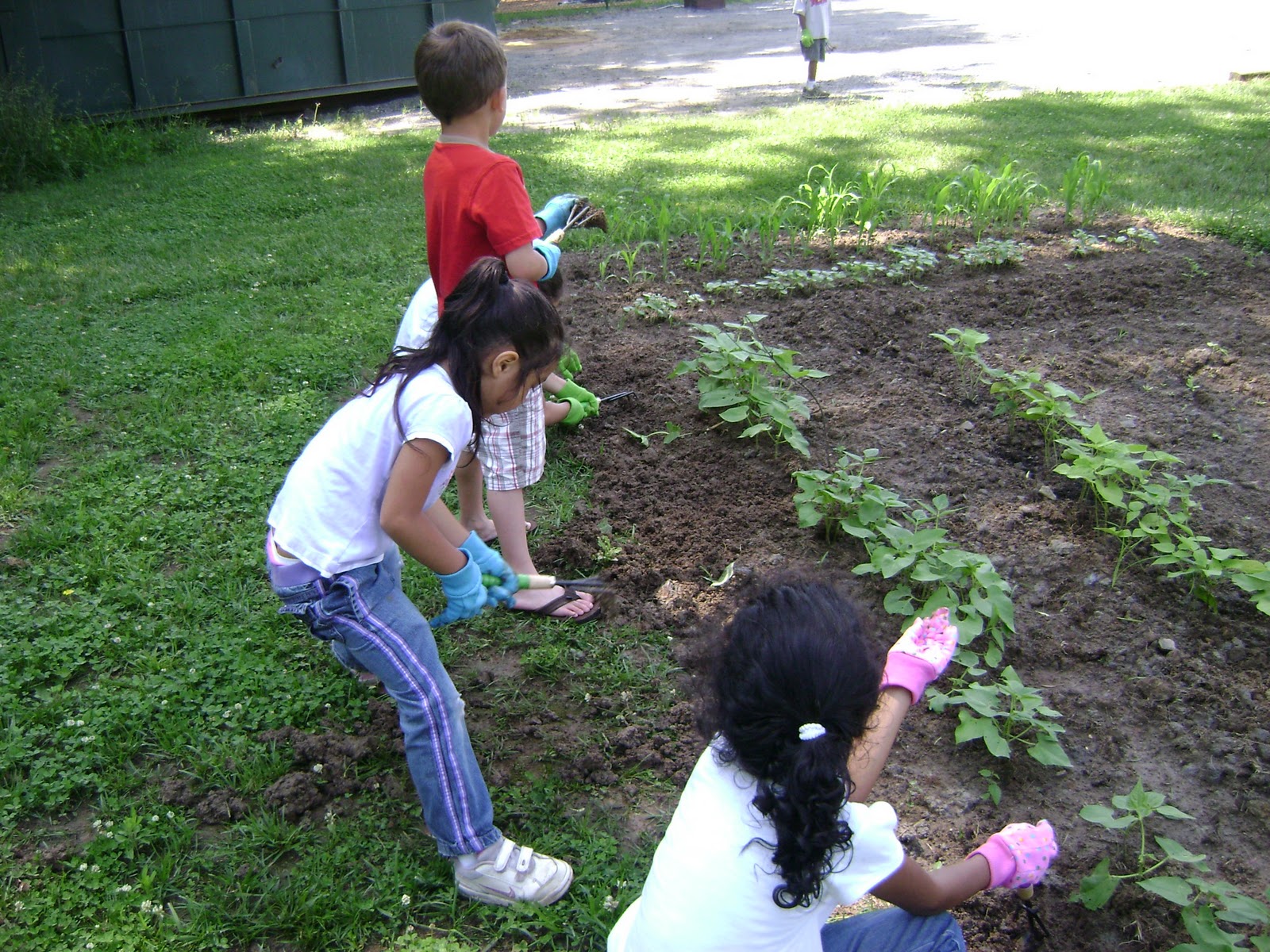
Gardening Teaches More Than How to Grow Food!

It's planting time! Look at these six children working cooperatively together to get the work done. 

They have to decide about pulling weeds, raking, what is ready to be picked and taking turns.
Look at them talking to one another, they may find something interesting in the dirt that would provide a teachable moment for the teacher. They are drawing conclusions, expanding their language and doing so much more than just growing food.
Deborah K. Howell, Assistant Director